





Main Meal: Regenerating Our Lives From Seed to Dress with Christy Dawn


Christy Dawn grew up in Placerville, California, where little has changed in the past hundred years - timeless. Though, it wasn’t until she moved to Los Angeles that she noticed just how timeless it is, and the impact her hometown inevitably had on her.
It’s what drew her to design vintage inspired clothing. There is something beyond the fabric I can hold on to. Something honest about vintage. Something classic that reminds her of home. It’s the dress you long for when you stumble upon that box of old photographs of your grandmother. The lines and fabric tell a story. They’re the clothes and stories grown regeneratively from seed, in an ancient way that heals the earth and feels good on your body. Through this practice, she's learned a lot, most important of which is when the land is thriving, we are, too.

Have you always been interested in fashion? What’s your first clothing-related memory?
I’ve always been drawn to clothing, but not in a traditional “fashion” sense. Growing up in California, I was usually barefoot, running around outside in soft, worn-in dresses that I never wanted to take off. I think my first memories of clothing are really about afeeling—of freedom, comfort, being close to the earth.
That’s still how I think about clothing today. It’s less about trends, and more about how something lives with you. How it moves, how it feels on your skin, how it holds your day.
How do you like your clothing to make you feel?
I want my clothing to feel like an expression of my inner world. Easeful, feminine, and connected. There’s something powerful about putting on a piece that carries intention, that was made with care, that has a story rooted in the Earth.
At the end of the day, I just want to feel like myself. Grounded, comfortable, and a little bit held.


Where did your interest in “farm-to-closet” ethos come into play?
It came from a moment where I couldn’t unsee the impact of conventional fashion. Around the same time, I was becoming more conscious of where my food was coming from, and it felt like a natural extension to ask those same questions about what I was wearing.
We started with deadstock fabrics, which was great because we weren’t hurting the Earth. But we soon realized that if we were going to be in the business of selling clothing, we wanted it to not just sustain the Earth, but activelyheal it. We realized the foundation of this vision had to be rooted in a more intimate relationship with the entire process—from the seed in the soil, to the fabric, to the finished piece. That’s really where “farm-to-closet” was born.
And in many ways, that journey mirrored my own life. As we began focusing on regenerating soil, I also started thinking about what it means to regenerate ourselves… to restore what’s been depleted, and to live in a more reciprocal way with the Earth.

Does this eco-mindedness pertain to other areas of your life? How so?
Definitely. It’s really a lens that touches everything… how we eat, how we care for our home, how we spend our time.
I think of it less as “eco-mindedness” and more as living in reciprocity. The way we grow our food, the way we wash our clothes, the way we raise our kids. Each of those choices can either take from the Earth or give back to her.
It’s not about doing it perfectly. It’s about staying connected, and making small, intentional choices that, over time, create a more nourishing way of living.
This month is Earth Month, so in the spirit of regeneration, I’m curious if you have a few fashion-related, planet-friendly tips to impart with us?
The simplest (and hardest?!) one is just to buy less, and choose pieces you truly love. There’s so much beauty in a small, intentional wardrobe.
I always encourage people to get curious about where their clothing comes from, what it’s made of, and who made it. I believe that what goes into fabric, goes into us—physically and energetically—so natural fibers and thoughtful processes make a huge difference to our overall wellbeing.
And then, care for what you already have. Wash it gently, repair it, pass it on. There’s something really romantic about extending the life of a garment and letting it carry more story over time.

At west~bourne, we’re all about relying on local, seasonal produce for delicious and nourishing meals. What’s the best vegetable dish you’ve eaten recently?
Lately I’ve been craving really simple food. We recently made this romesco chickpea potato and onion traybake. All in one, so easy and literally bursting with flavor. My kids actually ate it too.
When something is grown well and in season, it doesn’t need much. I love meals that let the hero ingredient speak its volumes.
Can you share a recipe you’ve got on repeat at your house? (a photo would be ideal too!)
We make a version of a grain bowl on repeat. I’s one of those meals that always works, especially with kids.
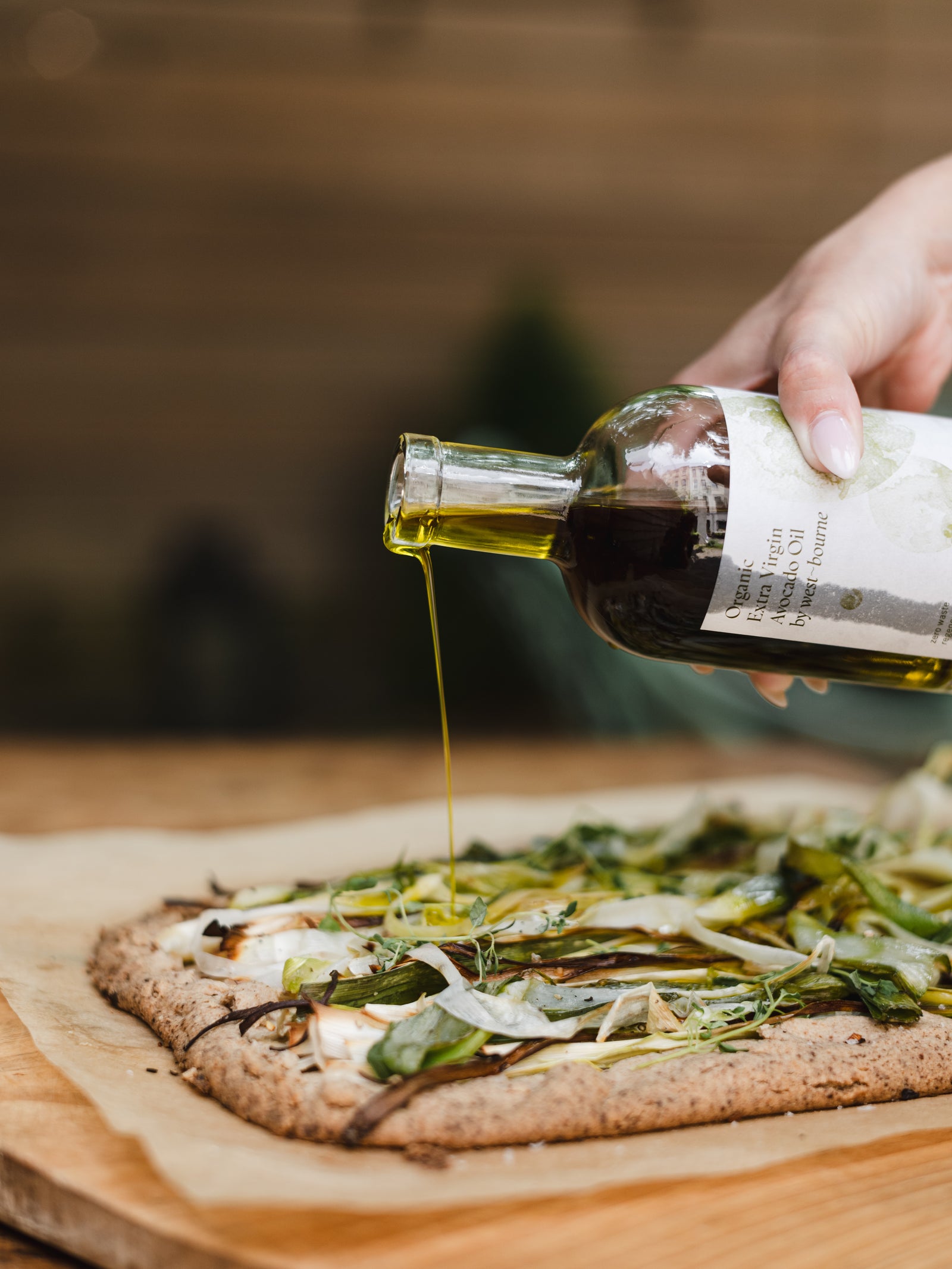
We’ll do a base of rice or quinoa, roasted sweet potatoes, greens, avocado, and some kind of lentil or bean. Then we’ll drizzle everything with a simple dressing (avocado oil, lemon, tahini, a little maple syrup, salt).
It’s nourishing, easy, and adaptable to whatever we have on hand, which I love.
How do you use avocado oil?
I use it all the time. It’s one of those staples that feels both practical and really nourishing.
I love it for roasting vegetables because of the high smoke point, and I’ll also use it in dressings or just drizzle it over bowls. It’s simple, but it elevates everything.
Who inspires you as it relates to taking care of the planet?
I’m so deeply inspired by regenerative farmers—people who are in relationship with the land every day, who understand its rhythms and are committed to caring for it over time.
There’s also something really inspiring about anyone who’s willing to question the way things have always been done, and imagine a more regenerative path forward. I just love Willow Defebaugh so much and her writing and art for Atmos raises the bar every day. Absolute hero.
What excites you about the future of fashion and sustainability?
What excites me most is the shift from sustainability to regeneration. Not just doing less harm, but actively restoring ecosystems and communities through what we create.
There’s a deeper awareness emerging, and a desire for connection to the Earth, to the people behind what we wear, to the story of how something is made. That gives me a lot of hope.
It feels like we’re remembering that beauty, healing, and responsibility can all exist together.



