





By Chefs for Chefs: How cooking is shaped by extraordinary produce with Rose Wilde


Rose Wilde is a Los Angeles–based chef, writer, and co-host of The Kitchen Tape podcast. She is the author of Bread and Roses (W.W. Norton, 2023), named one of the Best Books of the Year by Bon Appétit and the Los Angeles Times, with a second cookbook forthcoming from Chronicle Books. Known for her work with whole grains, fermentation, and botanicals, Rose launched her bakery, Red Bread, in 2011, earning awards for Best New Bakery, Best Cookie, Best Pie, Best Cake, and Best Bagel. She has since led pastry and bread programs at acclaimed Los Angeles restaurants including Manuela, Rustic Canyon, Rossoblu, and Mother Wolf.
Her work has been featured in The New York Times, Los Angeles Times, Bon Appétit, Washington Post, Wall Street Journal, Edible, Cherry Bombe, KCRW, NPR, The Splendid Table, and the Cooking Channel. Follow her on Instagram@trosewilde.

Where did your interest in food (and cooking) start?
I grew up between Ecuador and Florida, and food was central to both places in very different ways. In Ecuador, the markets were technicolor and astonishing—piled high with technicolor fruits, wild gnarled roots, and people making ice cream in copper pots right in the street. It felt alive and abundant, like everything was happening at once.
In Florida, my mother had a garden and made us such good food that it took me leaving for college to realize just how extraordinary she was. What felt normal at the time was actually incredibly thoughtful cooking—simple, deeply delicious meals made every day. When I started paying attention, I realized she was cooking craveable, globally inspired food informed by her travels, layering flavors and juicing ingredients in ways that now I’d probably have to pay a premium for just to experience.
Cooking became a way of paying attention. It taught me to notice small changes: how a mango smells when it's perfectly ripe, how bread dough feels when it's ready, how one ingredient can completely transform another. Long before I thought of food as a career, I loved it because it connected me to people, to memory and to place.

How does the culture around food in Ecuador, where you grew up, compare to that of Los Angeles, where you live now?
They're surprisingly similar in one important way: both are places where extraordinary produce can shape the way you cook. Southern California has some overlap with subtropical climates and is able to produce a handful of fruits I associate my youth – cherimoya, mangos
In Ecuador, that abundance simply felt normal. Fruit was picked from trees, markets were massive and daily reflecting what was growing, and meals were deeply connected to family and season. I went home from school for a large lunch everyday. Our afterschool activity was selling artisanal cheese, a little brat pack made up of my cousins and me going door to door – but mostly detouring to parks. Everything was about food.
Los Angeles has given me that feeling again. California's agricultural diversity is incredible, and the markets overflow with too many treasures to count. The difference is that LA also brings together influences from every corner of the world. It's one of the few cities where you can spend a day eating Oaxacan breakfast, Armenian pastries, Japanese coffee, Persian ice cream, and finish with Korean barbecue—and every meal feels authentic. That constant cross-pollination keeps me endlessly curious. It allows me to lean into my own experiences traveling and eating, and champion new flavors.

You’ve lived so many (incredible) lives in terms of your career. Can you tell us a little bit about navigating those different vocations and finding what brings you purpose?
Looking back, they don’t actually feel like separate careers. Whether I was acting, working in human rights, writing, teaching, or cooking, I’ve always been circling the same questions: what does it mean to be human, and how do we care for one another?
In my human rights work, I focused on legislative drafting—writing laws aimed at protecting women, children, and people with disabilities, those who are often othered and made most vulnerable. Again and again, I saw how these issues intersected with food at the root—access, dignity, nourishment, and care.
When I turned my attention to my own community in Los Angeles, food felt like the most immediate and tangible way to engage with those same questions. It’s a medium that allows me to connect, to tell stories, and to offer care in a direct, human way.
A meal can preserve a tradition, welcome someone in, or make a difficult day a little easier. That’s what keeps pulling me back. I love research, history, and writing—but baking lets me hand someone an idea they can literally hold in their hands.

Apologies for the pun, but you’ve got your hand in a lot of different pots, between your podcast, bakery, writing, and gardening. What does a typical day look like for you?
No two days look exactly alike, which is probably why I enjoy them.
One morning I might be recipe testing for my upcoming cookbookTiny Cakes, foodstyling for a brand, overhauling the garden, sending out a recipe for Eat More on Substack or recording an episode ofKitchen Tape. Another afternoon I'm teaching a cake class, editing a manuscript, baking for multiple celebrations or planning menus for an event.
The constant through all of it is that everything feeds everything else. Something I grow becomes a recipe. A conversation on the podcast sparks an essay. A cookbook idea starts in the garden. I try to follow my passions to the fullest extent to justify spinning in so many directions.

How do you stay inspired with your cooking?
I believe in attention over trends. Being deeply rooted in my senses is the only way I know how to navigate the world, so I try to stay present with what’s in front of me rather than chase novelty.
I spend a lot of time walking through farmers markets and gardens, reading old community cookbooks, talking to growers, and asking why certain dishes have endured for generations. I’m always looking at things from multiple perspectives—trying to understand them fully—because that’s often where play becomes possible. Inspiration usually comes from looking more closely at something familiar rather than searching for something completely new.
I also let beauty pull me in whatever direction it wants. I’m constantly absorbing art, food, and media, and all of it finds its way back into my work in unexpected ways.
I’m endlessly fascinated by memory, too. The desserts I return to most often are rooted in ordinary moments—a popsicle after swimming, birthday cake, toast with butter, watermelon running down your arms in summer. Those experiences belong to almost everyone, and I love finding ways to tell those stories through food. Food is an incredible time machine.
What’s a recipe you have on repeat right now? (feel free to share the full thing + a photo!)
At the moment, it's a simple tomato toast.
Good thick cut sourdough, toasted until crisp, a generous swipe of cultured butter, good mayonnaise or whipped ricotta (pick your fighter!), generous slices of peak summer tomatoes, flaky salt, lots of cracked black pepper, and whatever herbs happen to be thriving in the garden—usually basil, chives, or dill. If I have a couple extra minutes, which is rare with a toddler, I’ll gently fry up some thinly sliced garlic to top also.

We have to ask — what’s your favorite way to use avocado oil?
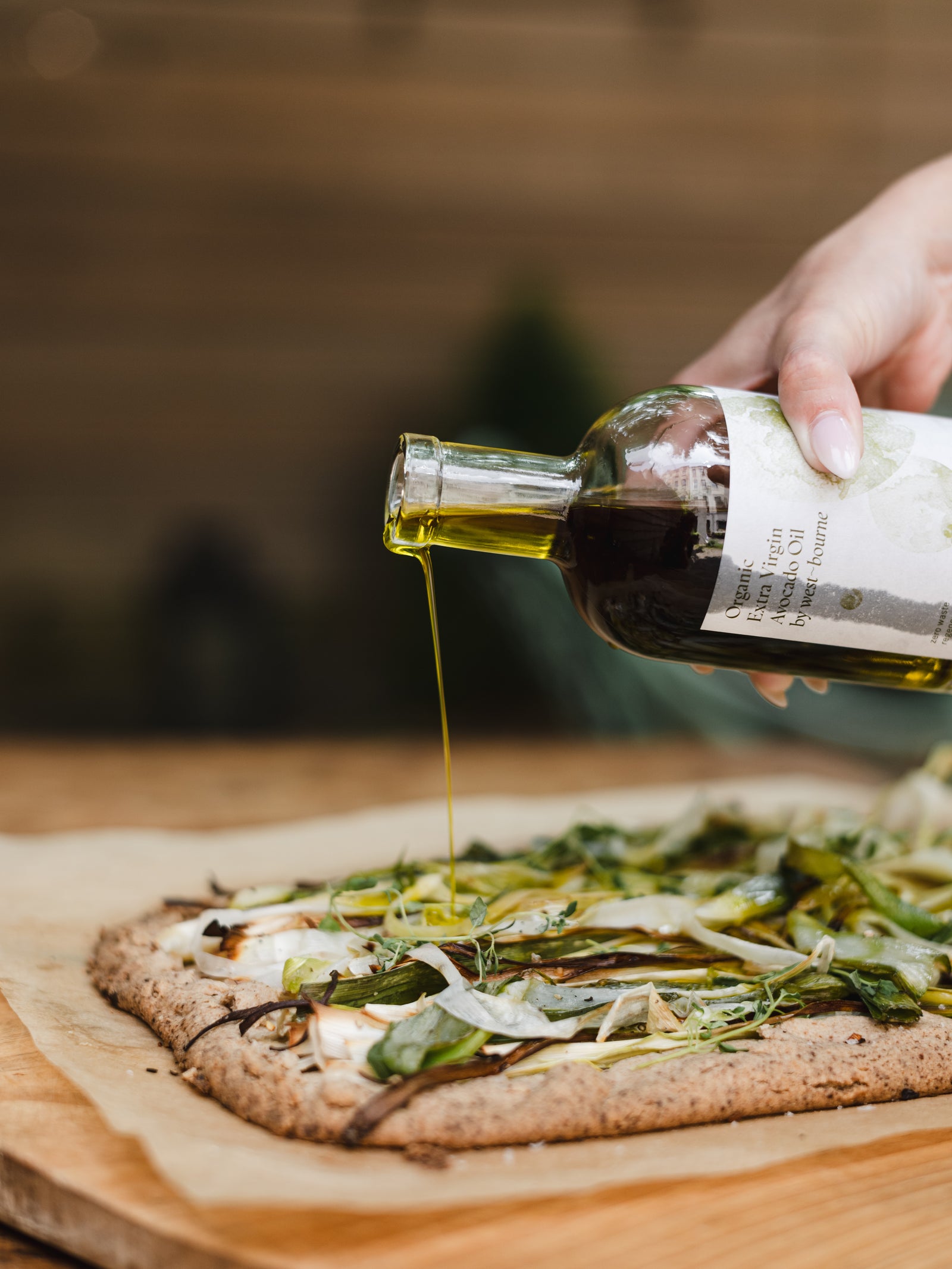
Lately I’ve been playing with it in pastry—especially in custards, buttercreams, and ice creams—where it adds a subtle richness especially in desserts where I am using Avocados.. I like using it to layer texture and depth in desserts that might otherwise feel too heavy or too flat.
I also love that it has a high smoke point, which makes it incredibly useful for everyday cooking. It’s perfect for simple dinners—pan-roasting vegetables or proteins where you want good color and flavor without worrying about the oil breaking down.
You’re also a Master Food Preserver. Can you tell us a little bit about what that entails?
The Master Food Preserver program is an intensive volunteer certification focused on the science behind safely preserving food offered at Land Grand Universities. I did the program in 2011 at the UCLA Extension, and later the Master Gardener Program as well.. We learn everything from canning and fermentation to dehydration, freezing, pickling, curing, and food safety, then help teach those skills to the public.
What I love most is that preservation changes the way you think about abundance. Instead of asking, "What should I cook tonight?" you start asking, "How can I capture this moment so I can enjoy it six months from now?" I think a lot of people think preservation means high tech labs or special tools, but mostly it relies on some of our oldest traditions, simple ingredients like salt, fat and sugar, help from friendly bacteria and time. Building up your pantry is the same as building up the flavor in your kitchen.
We know you’re a frequent traveler—what’s the most underrated food city in your opinion?
Montreal. I fell in love with their style of bagel decades ago, and it actually inspired my California sourdough take when I first opened the doors of Red Bread. There’s something about the wood-fired sweetness, the chew, the simplicity—it stays with you. Beyond bagels, the entire food scene is incredible. You have thoughtful, refined dining at places like Joe Beef, Vin Mon Lapin, and Lawrence, alongside some of the best bakeries anywhere—Rhubarbe and Patrice Demers are all standouts. It’s a city that takes both craft and pleasure seriously.
And I have to mention Beirut, especially now as it’s suffering again. It’s often called the “Paris of the Middle East,” a nickname that dates back to the mid-20th century, when the city was known for its cosmopolitan culture, vibrant café life, and strong French influence following the French Mandate period. Like Paris, Beirut has long been a place where food, conversation, and public life intertwine. What makes it especially compelling is its layered culinary identity. The city reflects not only Lebanese traditions but also Armenian, Syrian, and broader Mediterranean influences, shaped by waves of migration and a far-reaching diaspora. You can move from a classic mezze spread to Armenian pastries to Syrian sweets within a few blocks—or even within the same meal. All of which is under threat.

And last thing: where are your favorite places to eat in LA these days?
I feel like the luckiest to live down the street from Holbox, and can dip in for the best seafood whenever I am hungry. I spend a lot of time at RVR in Venice, the food is fantastic and very crushable. I love the hyper seasonal pastries Clemence de Lutz puts out at Petitgrain Boulangerie, a stop every Wednesday after market. I love the pizza at quarter sheets and all the plated desserts Hannah Ziskin is playing with there. I recently went with my son where he experienced his first “dessert storm” – one of everything! And I am obsessed with Wilde’s in Echo Park, breakfast and dinner, they can do no wrong for me.



