





By Chefs, for Chefs: In Conversation with Javier Ramirez


Our organic, regenerative extra virgin and pure avocado oils are reliable standbys for the chefs in our direct community and beyond—beloved for their efficacy and versatility in both high-heat cooking and finishing. This is why we are introducing a new series, "By Chefs, for Chefs," profiling individual chefs, their culinary journeys, and respective commitments to sustainability and/or regenerative sourcing.
Javier Ramirez didn't begin his career in kitchens but in finance. Numbers gave way to flavor, though, and over the past decade he's become one of Miami's most influential restaurateurs, co-founding award-winning locations of Alter, Palmar, and Bachour. His latest chapter, La Natural, began in his own backyard, where Javier perfected his slow-fermented pizza dough and served it alongside a selection of natural wines from Chile and Austria to Oregon. Javier opened La Natural in 2020 in Miami's Little River neighborhood, where sourdough pizza complements a thoughtful natural wine program and plates from chef Diego Moya.
At its core, La Natural is the product of years of refinement and a desire to create food that feels both rooted and communal. Here, he shares his journey, the lessons of sourdough, and what he's working on next.


Can you give us a quick recap of your career in food? And share how you ultimately went from finance to food?
I never had a serious interest in food until my early 20s, when I bought Jamie Oliver’s The Naked Chef. I cooked it cover to cover, and the rest is history. I’ve pretty much cooked for friends and family every weekend ever since. I moved to Miami in 2010 for a job in finance, and after four years the company closed. At that point, I decided to turn my hobby and passion for food into a career by opening my first restaurant, Alter. I wasn’t the chef — I was the restaurateur.
How did your background shape your culinary identity? Was there a moment or influence that set you on the path that ultimately led to La Natural?
Growing up, I didn’t have much exposure to great food, except on weekends at my grandmother’s house, where she made the greatest fried eggs, fries, and mini doughnuts. In my early 20s, as I became obsessed with food, I started seeking out the best restaurants whenever I traveled and trying to make the best possible meals when I cooked at home. When I began developing the dough for La Natural, my goal was simple: to create the best pizza in the world!
With La Natural starting as a backyard project, what do you remember most about those early nights with friends and family that you were looking to carry into the restaurant?
I most remember the look in people’s eyes and their reactions when biting into the pizza. There were a lot of “wows”!


You've been developing your sourdough pizza recipe for years. What has that process of refinement taught you—about the dough itself but about patience and cultivating your craft?
The biggest lesson is care and detail. Sourdough is a high-maintenance product—you can’t improvise or forget about it. It requires daily attention and care for every small detail: the timing, temperature, and measurements. A slight change in any of these can lead to a completely different, and often not undesired—result.
La Natural feels rooted in simplicity and integrity. How do you think about sourcing ingredients for your pizzas and plates? Are there regenerative farmers or producers in Miami that inspire you?
Yes, we truly believe that less is more. When it comes to ingredients, we always try to seek out the very best. There’s an Italian family here in Miami, the Aufieros, who make the most incredible fior di latte, burrata, and ricotta I’ve ever tried. Roberto Grossman from Tiny Farm is another inspiration—a local farmer deeply passionate about freshness and flavor—and we use his produce as much as we can.


From Alter to Palmar to La Natural, each feels distinct yet connected. What are you dreaming about next, whether it's a dish, a shift in cooking, or efforts toward sustainability?
My biggest challenge with La Natural is finding ways to make it more local and sustainable. I often think about how to create plates or toppings that feel more “tropical,” and I hope to introduce some of that in the future. We also recycle and compost as part of our ongoing effort toward sustainability.
What's your favorite way to use west~bourne avocado oils in your cooking?
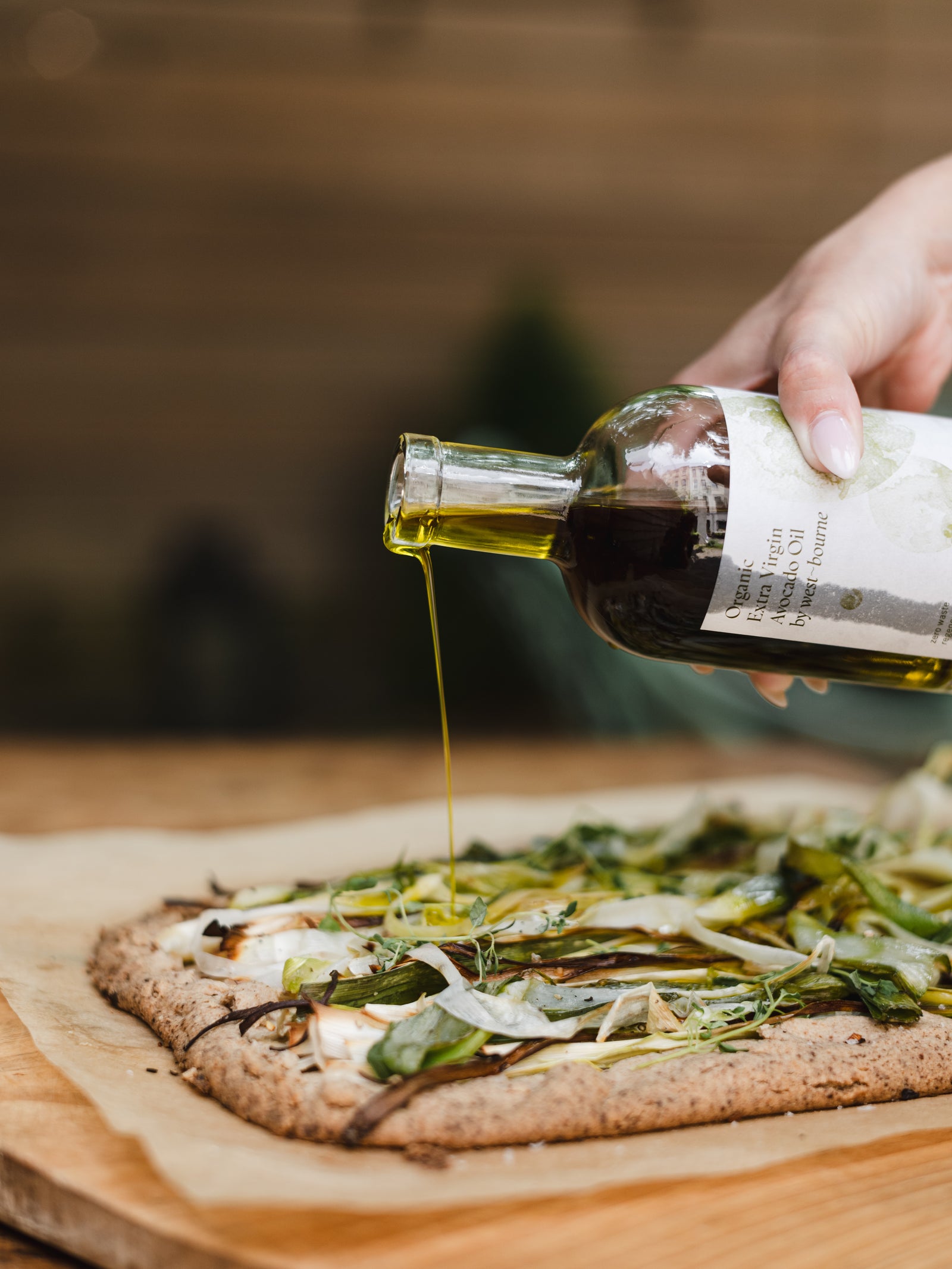
We add a secret amount of avocado oil to our pizza dough!
Is there a dish coming out of the kitchen at La Natural or out of your own kitchen that you are enjoying at the moment?
I’ve always been obsessed with a pasta where all four ingredients, coincidentally, start with the letter “P.” I used to make it at home most of the time, but recently decided to add it to the menu: Paccheri, Peas, Pepperoncini, Parsley, and Pecorino.

Paccheri, Peas, Pepperoncini, Parsley, and Pecorino
Makes 4 servings
Kosher salt
500g paccheri (preferably durum wheat)
1 lb bag frozen green peas
1/2 cup extra virgin olive oil
1/2 tablespoons pepperoncini
1 teaspoon Maldon sea salt
~20 leaves Italian Parsley
2 oz Pecorino Romano
1. Bring a large pot of water to a boil, adding enough Kosher salt until the water tastes like the ocean (around 1 tablespoon per every 4 quarts). Add the paccheri and cook according to instructions—be sure to set a timer.
2. When there is 4 minutes left on the timer, add the peas to the pot. At the end of the timer, drain in a colander and bring everything back to the same pot.
3. Add the olive oil, pepperoncini, and Maldon sea salt. Mix gently with a large spoon. Divide equally across 4 plates or bowls and shave the Pecorino Romano amongst them. Add about 5 leaves of parsley to each. Serve.
For more on Javier, visit La Natural in Miami or follow him at @gourmandj.



